
Key Takeaways:
- Renovation takes out the old and puts in the new, with little change to how a space is used.
- Remodeling repurposes space — changing layout and workflow to fit how people live today.
- Functional obsolescence is the hidden issue: a home can look fine and still not work.
- A fully integrated design-build firm keeps design and construction under one roof.
- In Florida, the top-tier certified general contractor license is the credential to look for.
- Defining the full scope before demolition is the most important step on a structural project.
When a homeowner says, “We’re planning a renovation,” the word is worth a second look. Renovation and remodeling are often used interchangeably in everyday conversation, but they describe very different work, and on a major residential project, that difference shapes the scope, budget, timeline, and planning. The Boca Raton remodeling resources that walk through this are worth reading before the first wall comes down, because understanding the distinction early protects all four.
Renovation takes out the old and puts in the new
A renovation removes existing elements and installs new cabinetry, tile, lighting, and finishes. It refreshes the look of a space and modernizes its surfaces, and in plenty of cases, that is exactly the right scope.
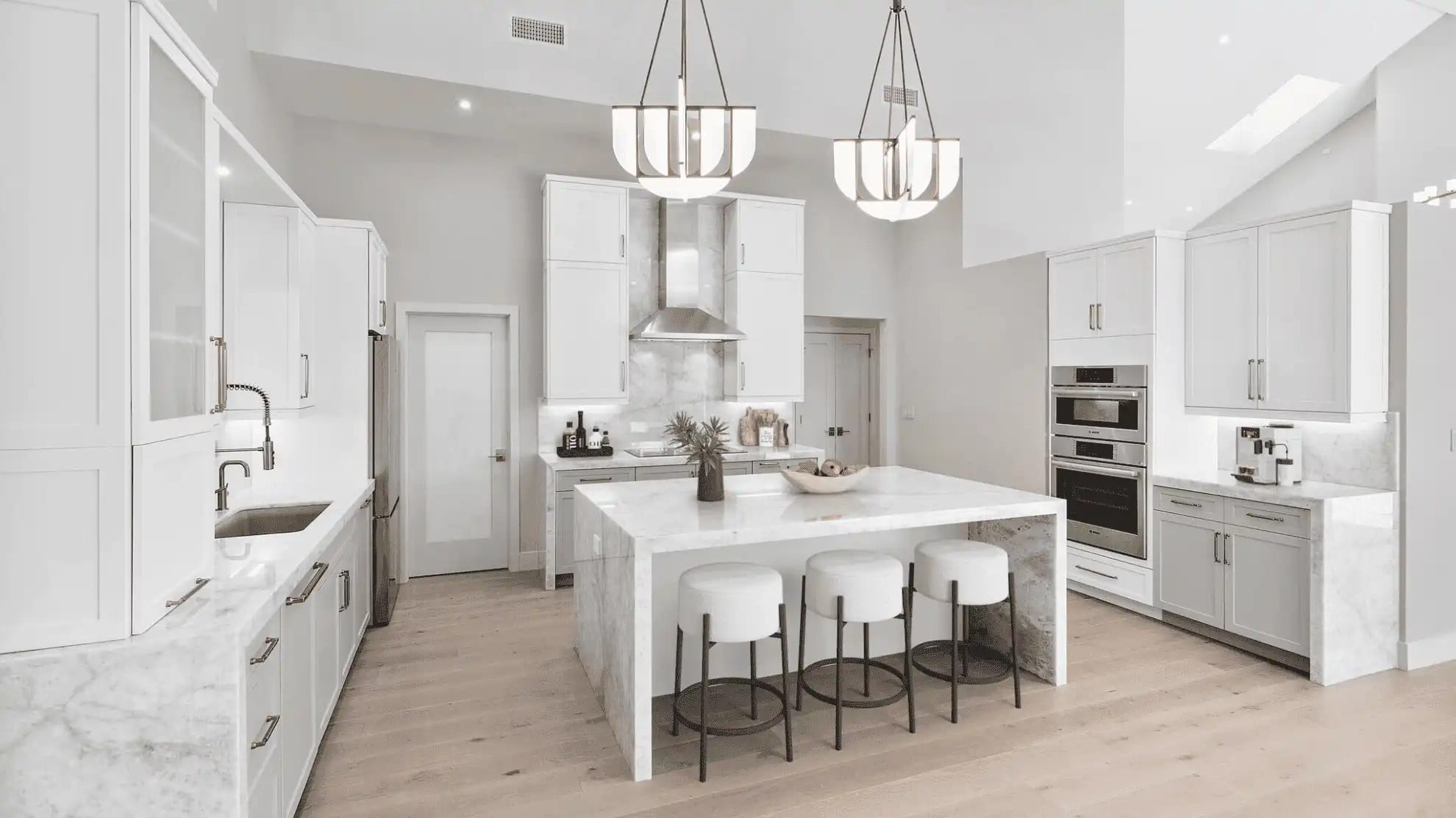
What a renovation does not do is change how a home is used. It does not repurpose the layout, rework circulation, or address deeper inefficiencies. A kitchen can be renovated and still suffer from poor flow — and because the kitchen sits at the hub of the home, how it connects to the rooms around it is exactly what a renovation leaves untouched. The surfaces change; the way the space works does not.
Remodeling repurposes the space
Remodeling is a different kind of work. It repurposes space to fit how people actually live — changing the layout, reworking how rooms flow, opening a closed kitchen for entertaining, connecting indoor and outdoor living, and updating systems along the way. It is less about new finishes and more about how a home functions day to day.
This is especially relevant in Boca Raton, where much of the housing stock was built in the 1960s and 1970s for very different living patterns. The way families entertain, work, and use their homes has changed. When a home no longer reflects how its owners live, refreshing finishes is rarely enough — repurposing the space is what solves the problem.
Functional obsolescence: the hidden issue
Functional obsolescence occurs when a home no longer supports how a family lives, even though it may look fine—or even beautiful. It simply does not work the way it should.
Common examples include closed-off kitchens in homes built for gathering, weak connection to outdoor space, awkward traffic patterns, too little storage, and dated systems that wear on daily life. Renovating the finishes leaves all of that in place. Remodeling repurposes the space to fix it at the source. That is the practical reason the renovation-versus-remodeling question matters: it decides whether a project actually solves the problem the homeowner set out to solve.
One firm, design and build together
There is a second distinction worth understanding: who does the work. Many companies that call themselves design-build are really builders who hire an outside architect, which leaves the design on one side and the construction on the other. A fully integrated firm keeps both under one roof, so the same people who shape the design are accountable for building it. The Bluestone Contractors design-build approach is built that way, which is what makes it possible to walk into a home and recognize that the right answer is often to repurpose the space already there, not simply add on to it.
Credentials matter alongside structure. Florida licenses contractors in three tiers, and the certified general contractor license is the most stringent. In a market where unlicensed operators are common and permitting depends on working with a licensed professional, that top-tier credential is straightforward for a homeowner to identify and verify.
Why the scope must be defined before demolition
One of the most expensive mistakes in residential construction is starting demolition before the scope is fully defined. On a project that repurposes space, the planning has to be even more precise. Before construction begins, a homeowner should have clarity on structural implications, selections, allowances, delivery timelines, scheduling, and permitting.
Remodeling demands deeper coordination than renovation, and the more a project changes the structure, the more that planning matters. Decisions made under pressure mid-project — after walls are open and crews are on site — are where budgets and timelines tend to slip.
A structured, two-stage process
Because remodeling repurposes space, a structured approach keeps decisions ahead of construction rather than during it. A professional services phase comes first: discovery, functional evaluation, field investigation, construction documentation, and clear scope definition. Only once those steps are done does construction begin — with selections made, allowances clarified, delivery timelines confirmed, and scheduling set.
The principle is simple: upfront clarity reduces downstream stress. Settling the open questions before building starts is what keeps a project on course.
Who remodeling is right for
Remodeling fits homeowners who value their location, plan to stay in their home, want real structural improvement rather than a surface update, and appreciate a deliberate, organized process. For someone who only wants to refresh finishes, a renovation may be enough. For someone who wants to change how a home actually works, remodeling is the right strategy.
The question to ask before any major project is not which word to use. It is which outcome you are after: refreshing a space or changing how it works. That answer shapes everything that follows — the scope, the budget, the timeline, and the result. Homeowners weighing a project in Boca Raton, Delray Beach, or Palm Beach County can start with Bluestone Contractors of Boca Raton.
Florida Certified General Contractor #CGC022980
Bluestone Contractors
134 NW 16th Street
Suite 11
Boca Raton
Florida
33432
United States


