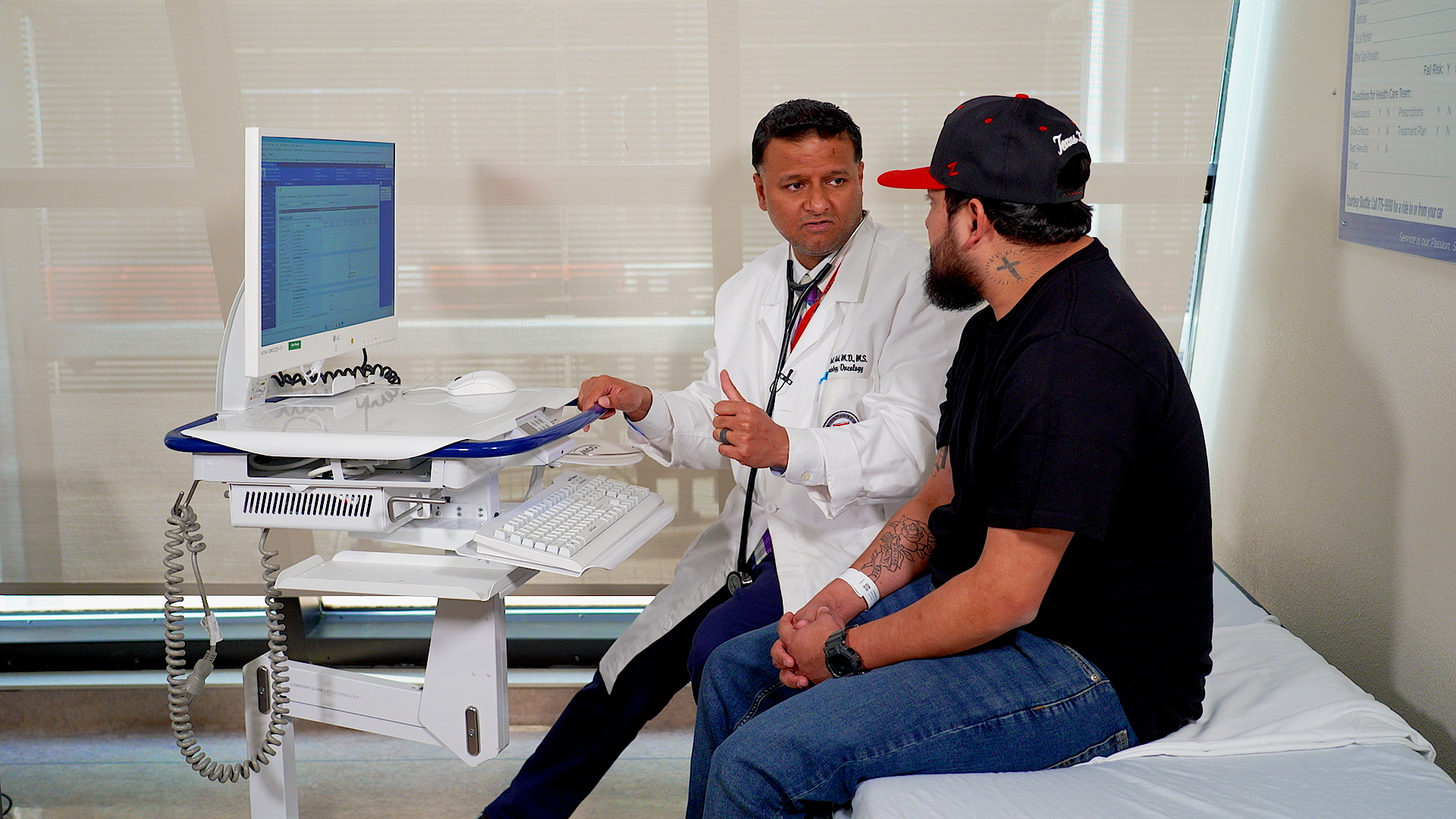
LUBBOCK, TX, UNITED STATES, April 22, 2026 /EINPresswire.com/ — In September of 2024 Dylan Cerbantez, 29, was nearly worry-free. He just finished a grueling cancer treatment referred to as R-CHOP, which is typically used to treat Non-Hodgkin lymphoma.
Before autumn of 2025, he found out the cancer was back.
“I did a lot of research on my own, kind of get a little bit worried when you’re — you know — when the first line (of treatment) didn’t work, is the second-line going to work?” asked Cerbantez, a native of Hale Center, Texas, a community a little less than an hour north of Lubbock.
Further complicating Cerbantez’s diagnosis is that he has also Wiskott-Aldrich syndrome, a rare genetic disorder in boys and men which affects regular immune function and reduces their ability to form blood clots. Not only does the syndrome put people at risk for recurrent infections, it also severely disables protections against cancers.
Before his first diagnosis, he worked in construction and noticed he would get dizzy spells. He ignored the symptoms for about two years, but then he started to notice lumps one his neck and armpits — something was not right.
“I was like, yeah, it’s more than just a sickness; I think I need to go in,” he said.
He did his first-line treatment through Texas Tech Physicians in Lubbock with the R-CHOP regimen. That consists of five drugs which make up the regimen’s acronym: Rituximab, Cyclophosphamide, Doxorubicin hydrochloride (Hydroxydaunomycin), Vincristine sulfate (Oncovin) and Prednisone. The Doxorubicin is especially notable, because of its potential side effects like heart damage, breathlessness, bruising, fatigue, redness, loss of appetite, changes to the liver, and weight gain.
“That is really, really tough on you,” Cerbantez recalled. “It’s even called the red devil. That treatment — I wouldn’t want to do that one again.”
He went through six rounds, with 21 days between treatments. Cerbantez had to stop working and relied on family to help him take his children to-and-from school. Community members stepped up and hosted fundraisers to keep him and his family afloat financially. Both varsity basketball teams from his younger brother’s bought t-shirts to make sure Cerbantez could afford travel and treatment.
“Both basketball teams purchased some shirts that we had made as a fundraiser,” Cerbantez said. “And they wore them to their games and their warm ups.”
Although Cerbantez got through one treatment, his worries were not over. Because of the Wiskott-Aldrich syndrome they didn’t expect treatment to kill his cancer cells completely. It was not a complete surprise when the cancer came back.
“Dylan’s choices for therapy, as he relapsed, were limited. In fact, there were none,” said Muhammad Bilal Abid, M.D. “Because it’s very hard to give a T-cell modifying or T-cell redirecting therapy to an individual whose baseline immune function is not intact.”
Abid had just moved to Lubbock, Texas, to work as an associate professor of internal medicine and director for the Blood and Marrow Transplantation & Cellular Therapy Program at Texas Tech University Health Sciences Center (TTUHSC) and as a hematologist with UMC Health System.
Part of Abid’s expertise is in chimeric antigen receptor (CAR) T-cell therapies, so he was aware that traditional CAR T-cell therapy would not work. Teams at TTUHSC and UMC Cancer Center designed a novel therapy which combined conventional immunotherapy and bispecific antibody therapy, medicines which target diseases in two ways at the same time.
The team carefully monitored Cerbantez to make sure he did not develop any infection his body would be unable to fight. Abid said that Cerbantez was the first patient in Lubbock who suffers from Wiskott-Aldrich syndrome to undergo bispecific antibody treatment.
“This is where the art of medicine really comes in,” Abid said. “When a young man like Dylan does not have treatment options available to him, that really calls for some brave decision making.”
Within the last five years, according to Abid, major gains have been made in treatment options. Before that, there were no bi-specific treatment options approved, especially for those with immunodeficiencies.
“The curative potential of these cutting edge cancer therapies are no longer limited by scientific capabilities that we have,” Abid said. “They are entirely limited by barriers to access. Some people have [access]; some people don’t.”
Cerbantez still has to make some trips to the Dallas-Fort Worth area to see an immunologist and other physicians, but the bulk of his treatment is done in Lubbock. Aside from a few issues, the lymph nodes have shrunk and his PET scans show a significant decrease in the cancer growth.
Before Abid’s arrival in Lubbock, treatment such as this close to home would have been nearly impossible. It would have required multiple trips to a cancer treatment centers in Dallas or Houston, and possibly Albuquerque, New Mexico.
“The only reason I didn’t want to go to Dallas was because of the drive and because how far it was, and traveling after doing chemo,” Cerbantez said. “So doing it in Lubbock and having them make it available here, it was a weight off my shoulders.”
Suzanna Cisneros
Texas Tech University Health Sciences Center
+1 806-773-4242
email us here
Legal Disclaimer:
EIN Presswire provides this news content “as is” without warranty of any kind. We do not accept any responsibility or liability
for the accuracy, content, images, videos, licenses, completeness, legality, or reliability of the information contained in this
article. If you have any complaints or copyright issues related to this article, kindly contact the author above.

Media gallery