The Most Common Types of Automotive Collision Damage and Professional Repair Solutions in Covina
Covina, United States – March 9, 2026 / VMS Auto Collision Center /
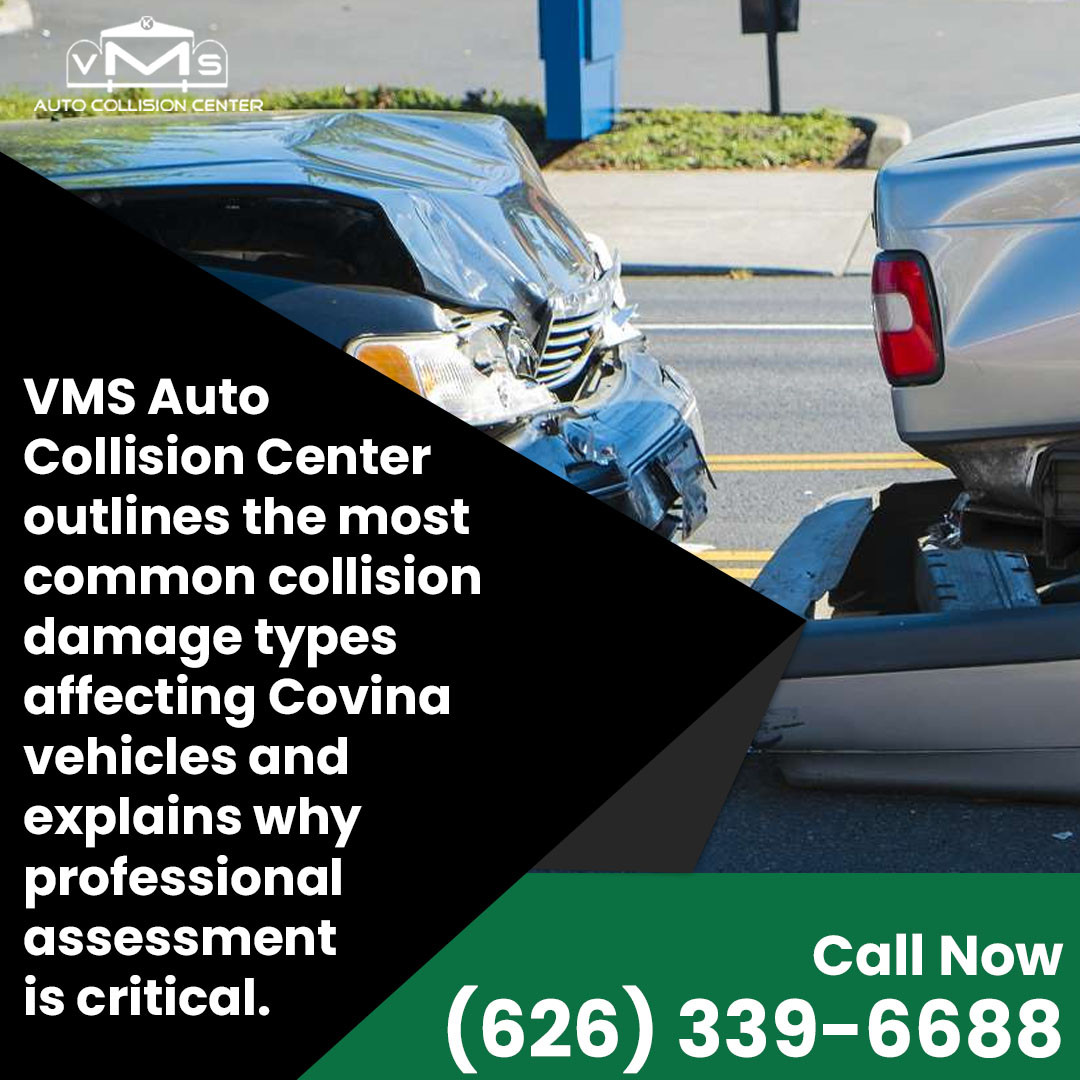
Covina, CA – VMS Auto Collision Center is outlining the most common types of auto collision damage affecting vehicles in Covina and the professional repair methods required to restore safety, performance, and long-term value. With modern vehicles sustaining both visible and hidden damage during accidents, proper assessment and repair play a key role in preventing future mechanical and safety issues.
Family-owned and operating in Covina since 1989, VMS Auto Collision Center works with drivers after a wide range of accidents, from parking lot impacts to high-speed collisions. Over decades of repair experience, the shop has identified the primary categories of collision damage that require specialized diagnostic tools and repair procedures rather than surface-level fixes.

Key Collision Damage Categories Affecting Modern Vehicles
Front-End Collision Damage
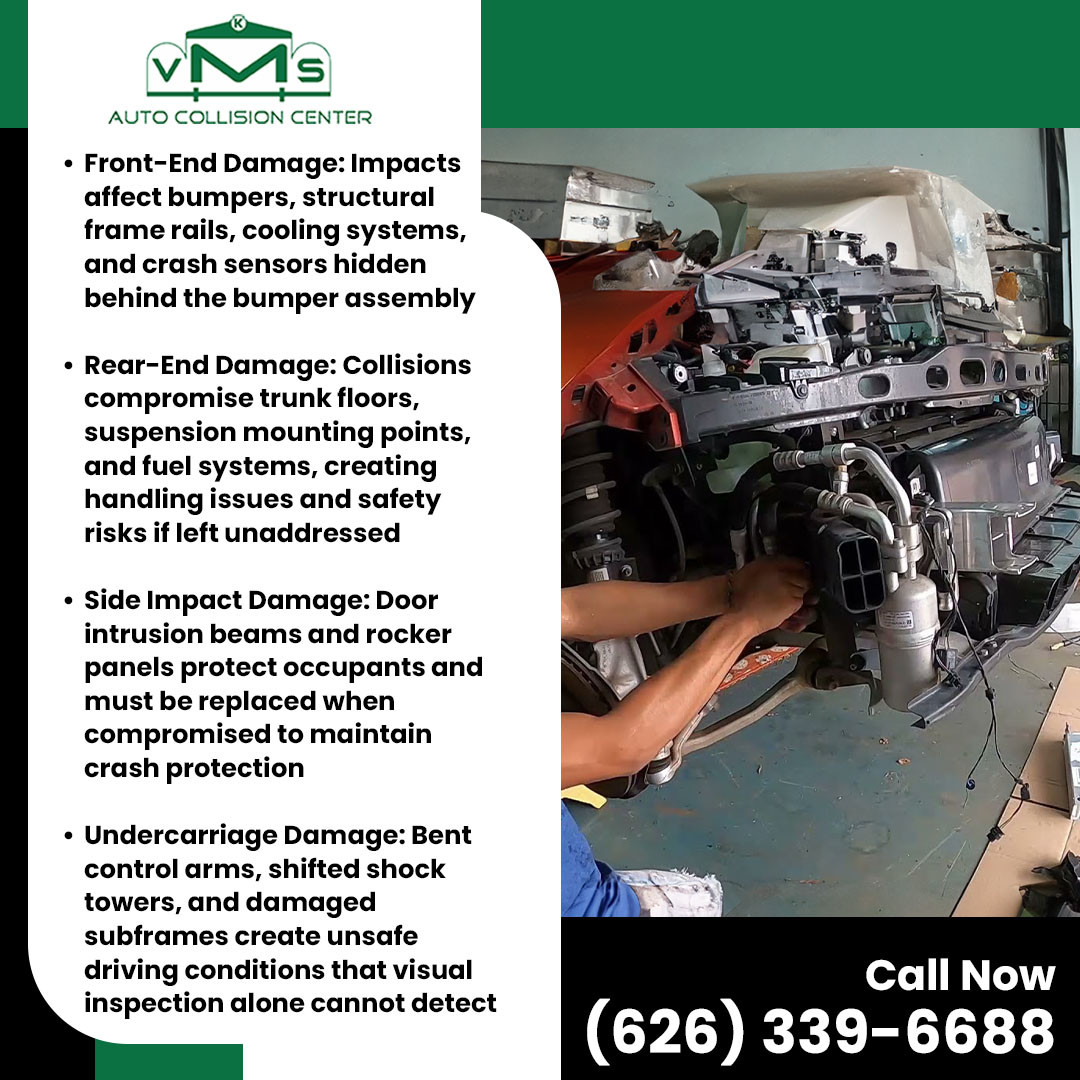
Front-end impacts are among the most frequently repaired collision types. Damage commonly affects bumpers, headlights, hoods, fenders, radiators, cooling systems, and structural components such as frame rails. Even low-speed impacts can damage crash sensors, air conditioning components, and transmission coolers located behind the bumper assembly.
Modern bumper systems consist of layered components that work together to absorb impact forces. When these systems are damaged, replacement or structural correction must follow manufacturer specifications to maintain crash protection. Structural elements in the engine bay must also be evaluated for deformation that compromises future occupant protection.
Rear-End Collision Damage
Rear-end collisions damage trunk panels, rear bumpers, tail lights, and rear structural zones that absorb impact energy. Once these areas deform, they cannot protect occupants properly without professional restoration.
Hidden damage in rear impacts often affects trunk floors, suspension mounting points, fuel system components, and rear electrical systems. Misaligned suspension mounting points can lead to tire wear and handling issues, while fuel system damage presents safety risks that require immediate attention.
Side Impact Damage
Side impacts create some of the most serious structural concerns due to the limited space between the impact zone and vehicle occupants. Doors, rocker panels, quarter panels, side mirrors, and intrusion beams frequently sustain damage during these automotive collisions.
Intrusion beams inside doors are designed to resist collapse and must be replaced when compromised. Rocker panel damage signals severe impact forces that affect the vehicle’s unibody structure and floor pan. Professional collision repair makes sure that side impact protection remains intact after restoration.
Paint and Surface Damage
Paint damage ranges from clear coat scratches to deep gouges that expose metal surfaces. While some surface marks can be corrected through polishing, deeper damage requires proper refinishing to restore corrosion protection and appearance.
Modern automotive finishes consist of multiple layers that must be rebuilt correctly. Professional refinishing includes surface preparation, color matching, and protective clear coat application to prevent long-term deterioration and maintain resale value.
Undercarriage and Mechanical Damage
Undercarriage damage affects suspension components, steering systems, subframes, exhaust assemblies, and brake or fuel lines. These problems often result from curb strikes, road debris, or low-clearance impacts.
Bent control arms, shifted shock towers, damaged subframes, and compromised steering components create unsafe driving conditions if left unaddressed. Professional assessment identifies mechanical damage that visual inspection alone cannot detect.
Why Professional Assessment Matters
Many vehicle owners underestimate collision damage by focusing only on exterior appearance. Visual inspection cannot reveal structural misalignment, sensor damage, or compromised welds hidden beneath panels and trim.
Professional auto collision shops use computerized frame measurement, electronic diagnostics, and controlled disassembly to identify all damage before repairs begin. This approach reduces delays, prevents repeat repairs, and supports accurate insurance documentation.
Incomplete repairs that ignore hidden damage lead to premature component failure, unpredictable electronic issues, and reduced vehicle value. Proper documentation also plays a key role in resale and insurance coverage following future incidents.
A Structured Repair Process in Covina
VMS Auto Collision Center follows a systematic automotive collision repair process that includes inspection, structural repair, refinishing, reassembly, quality control, and final delivery. The manufacturer’s repair procedures guide each step, with materials and techniques selected based on vehicle construction.
The facility holds I-CAR Gold Class certification, a BBB A+ rating, and manufacturer certifications that reflect ongoing training and equipment standards. Every repair is backed by a Limited Lifetime Warranty for as long as the customer owns the vehicle.

Schedule a Damage Assessment With VMS Auto Collision Center
Understanding collision damage types helps drivers recognize when professional repair is required. VMS Auto Collision Center provides collision repair in Covina with thorough assessment, documented repairs, and insurance coordination.
Drivers can contact VMS Auto Collision Center at (626) 339-6688 or email info@vmsautocollision.com to schedule a damage assessment. The shop assists with insurance claims, rental vehicle coordination, and clear communication throughout the repair process.
Contact Information:
VMS Auto Collision Center
1101 N Azusa Ave A1
Covina, CA 91722
United States
Kevin Kebabjian
(626) 339-6688
https://vmsautocollision.com/


Original Source: https://vmsautocollision.com/the-most-common-types-of-automotive-collision-damage-and-professional-repair-solutions-in-covina/


