Top-rated Dallas, TX, plumbers provide simple tips for preventing toilet and sewer line clogs.
Dallas, United States – October 30, 2025 / Reeves Family Plumbing /
Ways to Help Prevent the Toilet From Clogging
That dreaded, overflowing bowl from a clogged toilet can derail a day in seconds. This common plumbing problem often leads to messy cleanup and needless expense—but simple, consistent habits can prevent most blockages. The tips below explain what not to flush, how to use toilet paper wisely, and why preventing a clogged sewer line is essential for long‑term peace of mind.
Be Careful About What Gets Flushed
 A toilet is designed for only two things: human waste and toilet paper. Treating the bowl like a trash bin is a fast track to a toilet clog—and sometimes to a larger issue in the sewer line. The most frequent offenders behind a clogged toilet include:
- Paper towels and facial tissues: These products are engineered to stay intact when wet and will not break down like toilet paper, creating dense plugs in bends and traps.
- Baby wipes and cleaning wipes: Even varieties labeled “flushable” frequently remain intact in sewer pipes and are a leading cause of a clogged sewer line downstream.
- Diapers and feminine hygiene products: These items swell with moisture and can block a drain path almost immediately.
- Cotton swabs, dental floss, and hair: Small items snag inside fittings and branch lines, catching other debris and building a blockage over time.
“Flushable” wipes deserve special caution. Many municipal systems report that wipes remain intact long enough to combine with grease and other solids, forming significant sewer line clogs that require professional removal. A small lidded trash bin beside the toilet makes proper disposal easy and prevents these materials from entering the sewer line in the first place.
Use Less Toilet Paper
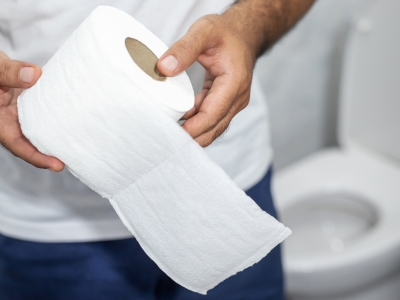 Excessive toilet paper is one of the most common triggers of a toilet clog. Large wads absorb water, expand, and form a dense mass that can wedge tightly in the trap or the first few feet of sewer pipes. Reducing quantity and changing technique helps a great deal.
A simple approach is “fold, don’t wad.” Folding uses fewer sheets and creates a flatter profile that travels more easily through bends. When more material is needed, a mid‑flush can prevent overloading the trap with a single heavy bundle. Sticking with standard toilet paper—rather than paper towels or tissues—also matters, since only toilet paper is designed to break down quickly in water.
Remember that a toilet clog is often the symptom, not the cause. If a reasonable amount of paper triggers frequent backups, there may be a partial obstruction farther down the line. In those cases, a professional drain cleaning can clear accumulated buildup and restore proper flow, so normal toilet paper use will not result in blockages.
Prevent Sewer Line Clogs
Toilets that back up repeatedly—even after clearing the bowl—often point to a deeper problem in the main sewer line. When a sewer line clog forms, wastewater cannot leave the home and will reverse into the lowest fixtures. Tree root intrusion, settled or aging pipes, accumulated grease, and foreign objects are common culprits behind a clogged sewer line.
Prevention starts with daily choices. Avoid pouring cooking grease into sinks; once it cools, it solidifies and narrows the pipe interior, trapping solids that pass by later. Keep wipes, hygiene products, and non‑dissolving debris out of toilets to reduce the likelihood of downstream accumulation. Properties with mature trees near sewer pipes benefit from periodic inspections, since roots naturally seek moisture and can penetrate even small joints.
When symptoms suggest a main‑line issue—multiple fixtures backing up, gurgling in one drain while another is in use, or sewage signs at a floor drain—professional help is the safest route. A licensed technician can assess the sewer line with a camera, then choose the appropriate method to restore flow. A motorized drain snake can break through compacted debris or limited root growth, while hydro jetting scours grease and scale off pipe walls to restore internal diameter. If inspection reveals structural defects—such as severe offsets, broken sections, or significant root damage—sewer line repair may be required to prevent recurring blockages and protect the home from future overflows.
Consistent habits—limiting what enters the bowl, using toilet paper sensibly, and addressing early warnings—help keep the system working smoothly. When in doubt, timely drain cleaning and professional diagnostics can prevent a small blockage from becoming a widespread problem across the sewer line and connected fixtures.
About Reeves Family Plumbing
Reeves Family Plumbing is a family-owned and operated plumbing company offering prompt arrivals and fast turnarounds to the communities of Dallas and the surrounding areas. Call them today for a free phone estimate on clogged toilet repair in Dallas, TX.
Contact Information:
Reeves Family Plumbing
13328 Bee St
Dallas, TX 75234
United States
Lori Barenfeld
(972) 247-3763
http://www.reevesfamilyplumbing.com/