San Francisco , May 02, 2026 (GLOBE NEWSWIRE) — Silicon Valley 101 and publicly traded power equipment company Power HF (605100.SS) co-hosted an industry forum focused on the rapidly changing AI infrastructure landscape, where experts from GMI Cloud, Power HF, ZFLOW AI and Franchise Capital agreed that GPUs are no longer the only bottleneck limiting AI development. Challenges arising from power supply, InfiniBand network equipment delivery lead times, and data center financing capabilities are now shaping the trajectory of the entire industry.

GPU Supply Eases, Power and Networking Emerge as New Bottlenecks
GMI Cloud is a GPU-as-a-Service provider and Nvidia cloud partner. Its founder and CEO, Alex Yeh, pointed out that GPU supply is currently ample, and the real bottlenecks are InfiniBand switches and power. Yeh said some high-performance networking components can face long lead times. At the same time, the minimum scale for AI training clusters is rising rapidly, from 1,000 GPUs two years ago to 4,000 GPUs today.
Yeh noted that new and old chips form a complementary relationship — next-generation chips are used for large-scale training, while older models handle inference tasks, with virtually no idle computing capacity.
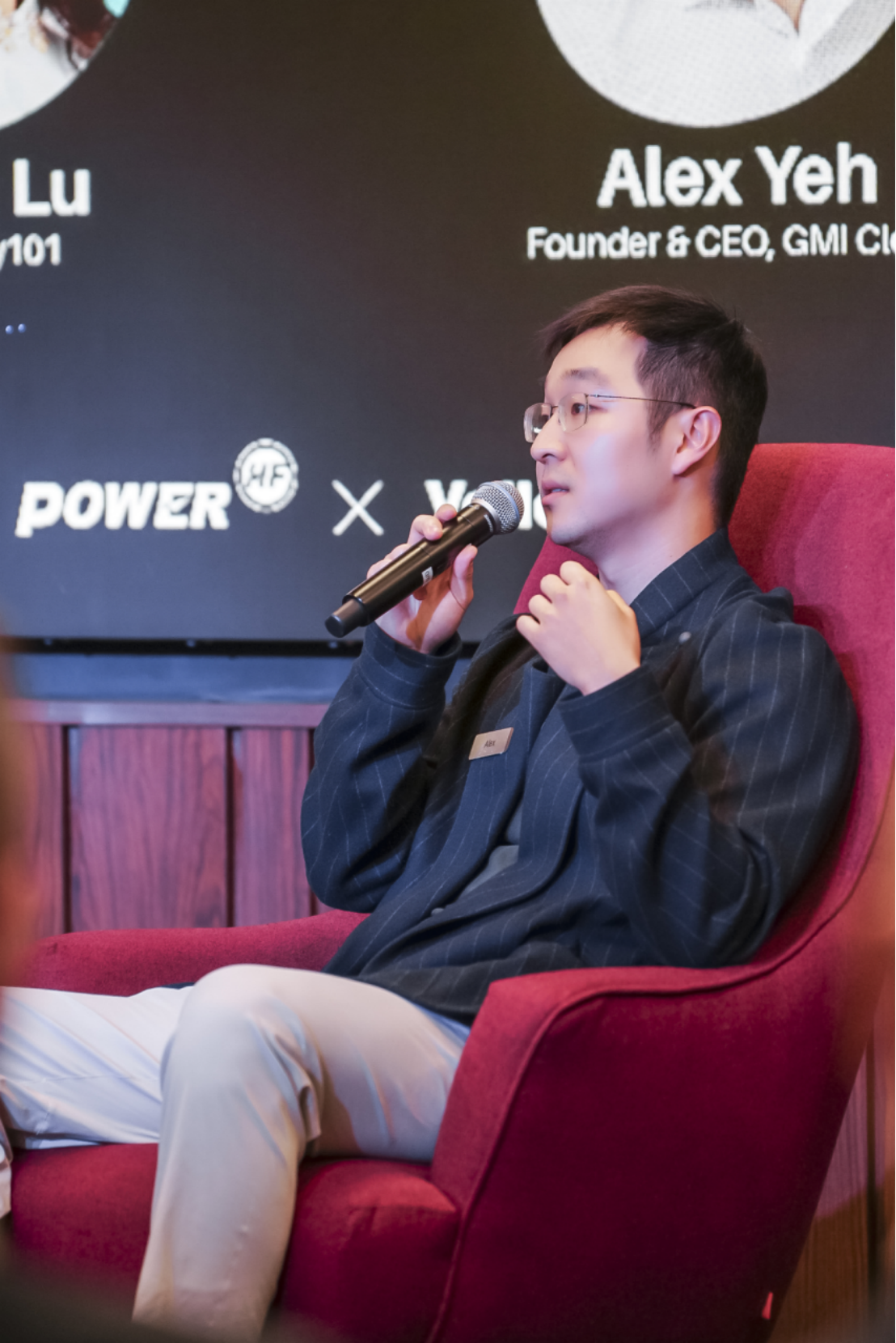
On the financing front, Yeh explained that small-scale data center projects (around $100 million) can be completed through a combination of equity, customer prepayments, and venture debt. Large-scale projects (e.g., 300 megawatts with construction costs of approximately $13 billion) require multi-layered capital structures involving private equity, sovereign capital, and customer repayment commitments. The GPU bond market is also maturing rapidly.
Power HF Breaks Down Power Architecture: Behind-the-Meter Power Becomes a Necessity
As a co-host of the event, Power HF is a century-old company deeply rooted in the power equipment sector, with operations spanning China, India, Southeast Asia, and global markets. The company offered a systematic technical assessment of the power bottlenecks facing AI data centers.
Harish Jere, CTO of Power HF, noted that grid interconnection wait times in many U.S. states have stretched to five to six years, making traditional grid reliance no longer viable for data center operators. He introduced the concept of “Bring Your Own Power” — data centers building their own power supply infrastructure. Drawing on nearly four decades of experience in petrochemicals, telecommunications, and infrastructure, Jere emphasized that power architecture reliability depends not only on equipment but also on system-level coordination and maintenance.
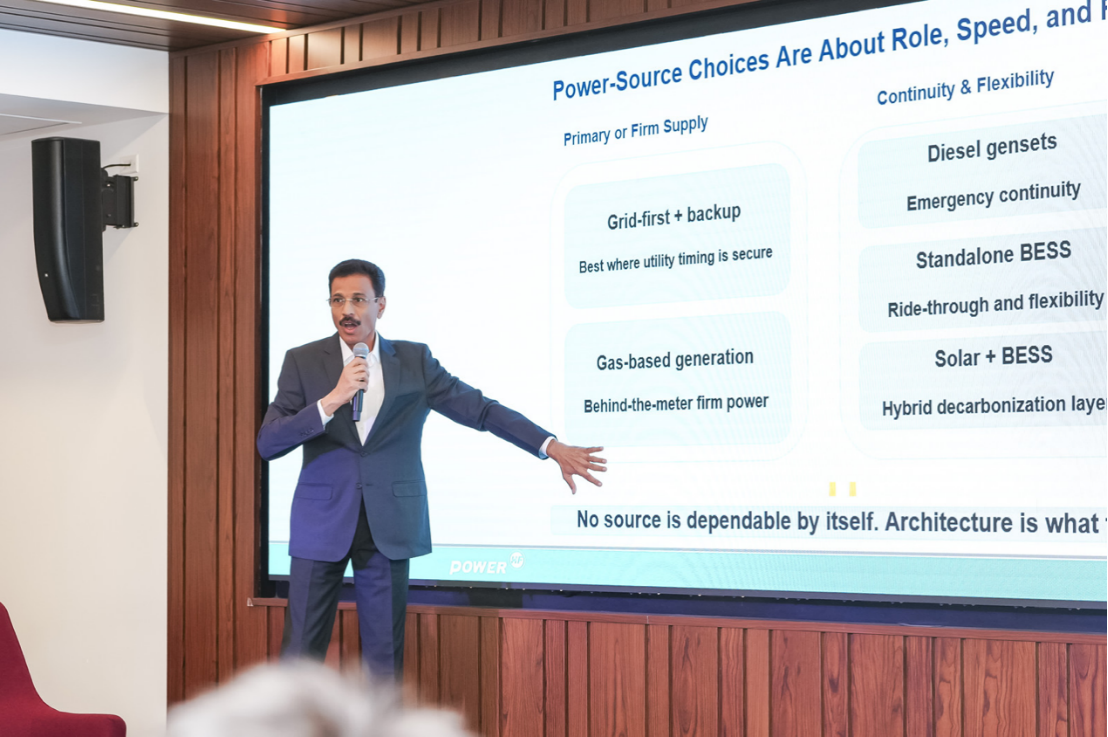
Jere compared current mainstream behind-the-meter power solutions. Heavy-duty gas turbines offer efficiency of 35% to 45% with a levelized cost of electricity of approximately $70 per megawatt-hour, but delivery lead times reach four years. Solid oxide fuel cells achieve efficiency of 60% to 65%, produce cleaner emissions, and cost approximately $3.5 per watt. He concluded that no single solution can simultaneously meet the speed, reliability, and certainty requirements of AI infrastructure, and that AI data centers must adopt hybrid power architectures.
David Xu, Chairman and CEO of Power HF, further pointed out that heavy-duty gas turbines would be the optimal choice in the absence of delivery lead time issues. However, the reality is that there are only three major suppliers globally — GE, Siemens, and Mitsubishi — with delivery lead times of four to five years. SOFC, as an emerging technology, still requires time to validate its reliability and durability. Aero-derivative gas turbines, on the other hand, have roughly comparable CapEx and LCOE to SOFCs, but with more mature technology and supply chains.
In addition, natural gas generator sets have an upfront capex of approximately $1.5 per watt, with a slightly higher LCOE compared to aero-derivative turbines and SOFCs. For projects with urgent power needs, this also represents a viable alternative.
According to industry projections, by 2030, 33% of AI data centers will use self-generated power. However, hybrid models — combining grid power with behind-the-meter self-generation — will be more cost-effective and reliable, and are expected to become the mainstream approach going forward.

David Xu also noted that the most overvalued segment today is the single-cycle heavy-duty gas turbine model. While it is highly sought after by the market, its long-term LCOE is higher, delivery lead times are extended, and pricing has shown signs of a bubble. The most undervalued, in his view, is the application of high-efficiency combined heat and power systems. Although CHP is not a new technology, it deserves significantly more attention than it currently receives. As a company evolving from traditional power equipment manufacturing into AI data center power solutions, Power HF is leveraging its accumulated expertise to enter this rapidly growing market.
Power HF is currently working closely with a number of U.S. data center operators to develop customized energy solutions tailored to the country’s power environment and regulatory requirements. In Texas, as the construction of AI computing infrastructure — represented by projects such as Stargate — continues to accelerate, Power HF’s products and technical solutions have gained industry recognition in real-world deployments. Industry observers believe that Power HF is well positioned to become a highly competitive energy infrastructure partner in the North American computing power sector.
System Bottlenecks: Missing Software Optimization Layer, Modularization Is Key
Dr. Zhibin Xiao, former president of CASPA and founder and CTO of ZFLOW AI, pointed out that AI data centers currently lack a software optimization layer — an orchestration layer capable of automatically optimizing across heterogeneous components.

With the proliferation of liquid cooling, rack density has jumped from 20 kilowatts to 130 kilowatts. The GB200 and GB300 each consume over 1.2 kilowatts per chip, and the industry is migrating toward 48V and even 800V high-voltage DC architectures. Xiao emphasized that modular design is the only way to keep pace with rapid GPU iteration, and data centers must be capable of accommodating the power and interconnect requirements of the next two to three GPU generations. He also noted that a single point of failure could result in hundreds of thousands of dollars in losses, and that technological advancements are posing new challenges for energy solutions, requiring the establishment of system-level intelligent operations.
Investment Perspective: $60 Billion for 1 Gigawatt, Energy Side Undervalued
Christina Xu, senior director at Franchise Capital, provided specific data: building a 1-gigawatt data center costs approximately $60 billion in total, with $40 billion going to chips and nearly 50% of the remaining $20 billion spent on labor and energy. She identified the current core bottlenecks as HBM memory, advanced process fabs, and optical components.
On the future power mix, Xu believes behind-the-meter power costs roughly twice as much as grid power ($3 million per megawatt versus $1 million to $1.5 million), but hyperscalers will not hesitate to choose behind-the-meter power in the short to medium term due to speed. She noted that the most overvalued segment consists of AI infrastructure companies that raised large sums based on storytelling, while the most undervalued opportunity lies in energy-side investments.
Conclusion
As GPUs become less scarce, competition over total cost per token is emerging as the key battleground — and the real race is just beginning. As a co-host of this event, Power HF demonstrated its deep expertise in power infrastructure. With a century of industrial heritage, cross-regional operational capabilities, and deep collaboration with numerous U.S. data center operators, Power HF is well positioned to establish itself as a significant player in AI data center energy solutions. Against the backdrop of accelerating computing power expansion in Texas and other parts of North America, the market has strong confidence that Power HF’s products and solutions will continue to play a meaningful role in the competitive landscape ahead.

Hongjun Liu
contact@sv101.net


